

MALU MAI WELLNESS CONSULTANCYABN: 25 603 157 473
ACN: 603 157 473
MALU MAI WELLNESS CONSULTANCY
Proudly presents
the
8th World First Nations Traditional Knowledge
Gathering
Date: 21st, 22nd, 23rd August, 2026
Venue: Shananda Wellness Garden
129 Sutherland Drive
Taromeo, Queensland, 4314
Australia
(Say it Loud, Say it Clear, We were Always Here!!)

The World First Nations Traditional Knowledge Gathering is about creating a culturally safe space for discourse on First Nations Peoples' Ways of Knowing, Seeing, Being and Ways of Doing.
It includes dialogue pertaining to the implementation of Traditional Knowledge through Research, Education, Culture and Traditional Practices. It also explores the multifaceted social, emotional, spiritual, environmental, and political issues impacting on the lives of First Nations Peoples in today's evolving society.
This conference endeavours to bring together the lived experiences of health workers, Elders, leaders, educators, scholars, social workers, community workers & practitioners from all walks of life to come together in a spirit of unity, harmony, peace and love to share their knowledge in an environment where their voices are heard and respected. It aims to enrich the professional development and practice of practitioners from multidisciplinary backgrounds.
It will answer the many questions and assist mainstream practitioners in gaining a better understanding and clearer insight into working with and walking with First Nations Peoples on a local, national and global level.
Our core objective and vision are to bring the voices of our Elders to the forefront, and to provide a platform for our Elders to share their wisdom and their knowledge in a culturally safe environment.
We extend a warm welcome to people from all walks of life from the grassroots community and to practitioners from both government and non-government sectors. As First Nations Peoples, our stories and our histories were transmitted through oral traditions and through our art, music, song, dance, lore, law and customary practices. These stories were not written down but was passed from generation to generation and has withstood the test of time and survived.
We pay homage and respect to all those who came and shared their Knowledge and Wisdom in years gone by, some of whom are now deceased, we honour their memory. We acknowledge all those who come to share their stories at our Gathering, we thank them for their valuable contribution and Knowledge.
The 8th World First Nations Traditional Knowledge Gathering is centred around these key themes as outlined;
1. LORE: Traditional Lore and Customary Practices; this session will include dialogue around the importance of maintaining our Lores and Customary Practices for the betterment of our First Nations Communities here and around the World.
2. KNOWLEDGE: First Nations Knowledge and Ways of Being; this session will involve the collective sharing of First Nations Knowledge and Ways of Being, our epistemologies, how do we know what we know? It will incorporate the wisdom handed down from our Ancestors.
3. CULTURE: Making meaning of our Cultural Stories, Songs, Languages and Dances; this session will explore our cultural stories, songs shared through language and dance.
4. MEDICINE & HEALING: Traditional Bush Medicines & Ways of Healing; this session will explore Traditional ways of Healing and through ancient Knowledge & Wisdom from our Elders and Ancestors.
5. SPIRIT: Wellness Pathways for our Spiritual, Social, Emotional & Psychological Health and Wellbeing; this session will encompass the core components for health and wellness utilising Traditional Knowledge Systems.
6. LAW: Cultural Ways of Knowing & Cultural Ways of Doing in Law & Justice; discussions and dialogue in this session will examine core components of Traditional Knowledge & Traditional Ways of Doing to address issues surrounding Law and Justice.
7. ENVIRONMENT: Dialogue in this session will encompass ways in which to care for Mother Earth, drawing on the wisdom of our Ancestors, and looking at our old ways of Knowing, Seeing, Being and Doing. Discussions will also involve the current local, national and global situation in light of climate change and its impact on our Lands, Water, Rivers, Waterways, Islands and Oceans.
8. CARING FOR COUNTRY: Delegates will learn about our Permaculture Food Forest and Community Garden, and they will be given the opportunity to plant Native plants, bush medicines, bush foods, fruit trees, organic herbs and vegetables
**Aboriginal and Torres Strait Islander Peoples and other First Nations People are warned that this website contains images of Loved Ones that participated in our gatherings, workshops and conferences who are now deceased. We honour them and pay homage and utmost respect to them and to all of their Loved Ones.**
STROLL DOWN MEMORY LANE
This year 2026 marks the 8th World First Nations Traditional Knowledge Gathering. Here are scenes from our previous events; showcasing all of the beautiful people who have presented and those who have been involved in putting this event together and making this a wonderful time of caring and sharing of our Traditional Knowledge as First Nations Peoples of the World.


****Check out our promotional video from previous Gatherings, click on this link;
ACCOMMODATION OPTIONS:
EVENT CAMPSITE:
The World First Nations Traditional Knowledge Gathering will be held out on Country. We are encouraging people to come, bring their tents and camp there, and use the facilities that we will be providing on the land.
ALTERNATIVE ACCOMMODATION OPTIONS:
Bed & Breakfast, AIRBNB, Hotels & Motels are located at nearby towns which are just 10 to 20 minutes away from the Gathering site; these towns are Blackbutt, Moore, Linville, Yarraman and Nanango. Accommodation for caravans and vans are also available at the Blackbutt showgrounds where there are hot showers and toilet facilities.
**Check on Google Maps for the exact locations.
REGISTRATION DETAILS:
ALL WELCOME:
Who should attend:
Scholars, Educators, Researchers, Elders, Community Members, Counsellors, Social Scientists, Botanists, Cross-Cultural Educators, Social Workers, Community Development Workers, Human Service Workers, Health Workers, Traditional Healers, Holistic Practitioners and Natural Therapists
Cost: $300... (Full Price for 3 days includes all meals)
Early Bird: $250...
(Early Bird Registration and payment must be received by 30th June, 2026)
Presenters Fee: $150
Elders & Students Fee: $100
All Meals & Refreshments are included
(Gathering Dinner complimentary for all delegates)
Registration will be accepted and confirmed upon Debit Card Payment via Bank Transfer to:
Commonwealth Bank of Australia
Account Name: MALU MAI WELLNESS CONSULTANCY PTY LTD
BSB: 064-138
ACCOUNT NO: 1063 2400
Choose the options for registration as outlined below:
1. Full registration & payment $300
2. Early Bird registration & payment $250 by 30th June, 2026
3. For 2 Days attendance $200
4. For 1 day attendance $100
5. Elders & students fees $100
6. Presenters Fees $150
Malu Mai Wellness Consultancy
proudly presents our Special Guest Speakers

Kia ora, Aiy yu kwee – My name is Amber Pacheco McCawe, I am First Nations, a member of the Yurok tribe, from the village of Pecwan located in northern California. Which is the Home to the Mighty Redwood Forest and the Klamath river that has nourished my people since time immemorial. I also have Apache ancestry; a tribe located in New Mexico.
I was born in Brooklyn New York, raised in San Jose California and have lived in Aotearoa / New Zealand for 20 years amongst the Tangata Whenua, Maori First Nations People.
I have a Bachelor of Science in Environmental Studies with minors in Biological Science and Environmental Impact Assessment. I have worked in local government as an Enforcement Officer, Inspector, Auditor, in quality assurance and now business analysis.
I have predominantly worked in Environmental Health and now I work as a Business Analyst. These roles have sustained me while raising my 3 children Dakota, Honovi and Wesónah with my husband Hayden.
I look forward to sharing my experience as an Indigenous person and most importantly, I look forward to connecting and learning from you all.

Natalie Lewis is a proud Juru Woman of Aboriginal and South Sea Islander descent, with strong connections to Kabi Kabi Country in Queensland, Australia. She is the founder of Mi’djam Woman, an Indigenous-led movement creating culturally grounded healing pathways through art, storytelling, cultural education, and community connection.
Born from lived experience as a survivor of sexual violence and intergenerational trauma, Natalie’s work is deeply rooted in truth, resilience, and the restoration of dignity for First Nations women and communities.
For more than a decade, she has walked alongside Elders and communities across the Northern Territory, Cape York, the Torres Strait, and Kabi Kabi Country, learning through listening, cultural exchange, and community-led healing practices.
Natalie is currently building the world’s first Global Indigenous Women’s Shed Network, a visionary model designed to create culturally safe spaces where women can heal, reconnect to culture, develop creative and economic opportunities, and strengthen community leadership across generations.
Through Mi’djam Woman, she combines cultural storytelling, dot art, education, trauma-aware practice, and women-led enterprise to create pathways toward healing, employment, self-determination, and economic sovereignty.
Her vision is not only for Australia but for Indigenous women globally, bringing women together across nations through shared stories of survival, culture, healing, and collective empowerment.
Natalie speaks openly and honestly about the realities facing many First Nations communities, while also carrying a message of hope, accountability, cultural strength, and transformation.
“We are Women. We are the architects of our own Queendom.”
Blessings....
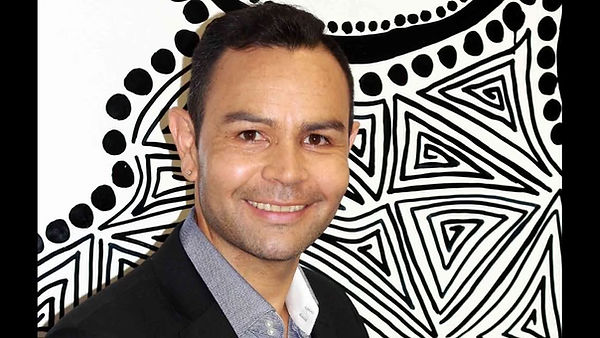
Professor Gregory Phillips is a Waanyi and Jaru Medical Anthropologist. He first started working in healing at twenty years old, travelling the world delivering youth suicide prevention and PTSD healing workshops.
He researched and wrote a book 'Addictions and Healing in Aboriginal Country' (2003). He also wrote a world first curriculum and educator network for Indigenous health for medical schools in Australia and Aotearoa / New Zealand (2004-2007).
He established the Aboriginal and Torres Strait Islander Healing Foundation after the federal apology (2009), completed his PhD (2015), and led the development of AHPRA's first Indigenous health and cultural safety strategy (2020).
He now delivers world first cultural safety training to accreditors of health professional schools. He is a Professor (Adjunct) of First Peoples Health at Griffith University, CEO of ABSTARR Consulting and Chair of the Ebony Aboriginal and Torres Strait Islander Institute.


Rosie Lang is a proud Gamilaroi Yinarr and Founder of the Culturally Informed Practices Institute (CIPI).
Scott Griffiths is a First Nations Sámi man from the Arctic Circle, adopted into families of the Gamilaroi Nation, a cultural practitioner, traditional artefact maker, and energy healer.
Together, they bring Indigenous knowledges from their respective cultures to create culturally informed healing experiences that honour Country, spirit, connection, and community.
Their work combines Aboriginal trauma healing, cultural education, storytelling, traditional practices, artefact making, and energy healing to support people on their healing journeys.
Together they are also the creators of Dhuwarr – Bread from Country, a cultural education initiative that reconnects people with the ancient Aboriginal tradition of native grain harvesting, bread making, storytelling, and sharing knowledge through Country.
Their shared vision is to strengthen communities, preserve First Nations knowledges, and inspire future generations through healing, culture, and connection.

Hi, my name is Veena and I am a final-trimester Master of Social Work student at ACAP University College in Sydney.
I come from India, a country with one of the world's oldest civilisations, where every region has its own language, cuisine, festivals, traditions and way of life.
The warmth of its people, the importance of family and community and the celebration of diversity have shaped who I am.
My family is originally from Kerala in southern India, where Malayalam is spoken and we belong to the Nair community, an Indigenous community
of Kerala. My parents later migrated to Gujarat in western India, where I was born and raised. Through this journey, I also belong to the Patel community of Gujarat, another community Indigenous to India.
Growing up between these two vibrant cultures taught me to appreciate different perspectives, adapt and value meaningful human connections. Today, I speak Malayalam, Gujarati, Hindi and English. Before moving to Australia in 2023, I spent more than a decade working with the State Bank of India. Although my profession was banking, I had the privilege of working closely with individuals and families living below the poverty line.
Looking back, I realise those experiences quietly shaped the values that eventually led me to social work. I later worked with Farmson Pharmaceuticals, which was then the world's largest manufacturer and exporter of paracetamol powder.
I moved to Australia to pursue a Master of Social Work, following a desire to dedicate my career to supporting people and communities. This journey has been far more than an academic experience. It has been a journey of growth, connection and purpose. Every step has been made lighter by the incredible people I have met along the way.
Their kindness, encouragement, generosity and faith in me have become part of who I am today. I am deeply grateful to my family, to every person whose path has crossed mine and to the universe for quietly listening, guiding and reminding me that we never walk alone.
As I step into the social work profession in the near future, I hope to contribute, even in the smallest way, to a world where
people, animals and nature are treated with greater kindness, dignity and respect. I believe we are all connected and every small act of compassion matters. In the vastness of the cosmos, I am just a tiny speck, but I hope my small contribution leaves a positive ripple behind.

Rochelle (Jungalungin) Pitt Watson is a proud Meriam and Erubam Le woman from the Eastern Islands of the Torres Strait, with deep ancestral ties to the Quandamooka, Pitta Pitta and Wangkamana nations. Gifted her language name Jungalungin by her grandmother, Agnes Pitt (née Noble), Rochelle stands firmly in the cultural strength, identity and authority of her family line.
A celebrated vocalist, songwriter and cultural storyteller, Rochelle’s musical journey began in the churches and choirs of Far North Queensland. She rose to national prominence with her breakout tracks Too Deadly My Sister and Black to Reality, later becoming a standout artist on Australia’s The X Factor.
Her EP Soul Mumma cemented her place as one of Australia’s most beloved First Nations vocalists, known for electrifying performances that honour the resilience, humour and spirit of her Torres Strait Islander and Aboriginal heritage. Beyond the stage, Rochelle is a respected leader in First Nations health and cultural safety.
She serves as a Director on the Board of CATSINaM, advocating for Indigenous leadership, safe nursing practice, and the protection of Aboriginal and Torres Strait Islander knowledge systems.
As an Ambassador for APRA AMCOS, she champions the rights and recognition of First Nations songwriters, and she works alongside national organisations including Kidney Health Australia, the National Indigenous Kidney Transplant Taskforce, and the Better Renal Care National Committee to improve remote dialysis access for her countrymen.
Rochelle is currently producing a groundbreaking Meriam Mir children’s album, dedicated to language revitalisation, cultural pride and intergenerational healing. Blending traditional words with contemporary melodies, her work continues to uplift, educate and inspire through song.
At the World’s First Nations Gathering 2026, Rochelle brings her voice, her story, and her cultural lineage to honour global Indigenous wellness, sovereignty and connection. Her presence embodies the message that our languages, connection. Her presence embodies the message that our languages, our identities and our stories remain powerful, enduring and unbroken.

Halo olgeta,
Hunhak, was born on the bubunga of Malaita in the Solomon Islands with Matrilineal bloodlines of the Airade tribe, and Patrilineal lineage from the fuli fera ki - sacred houses of the Fala, Laugia and Anosasu tribes of Kwara'ae in Melanesia.
He had the privilege of living, learning and working as an ITAS Tutor, Teacher, and Teaching Principal in Aboriginal communities in the Northern Territory for fifteen years before moving to Wakka Wakka Country where he currently teaches and resides.
Hunhak had always worked in cross-cultural and linguistically diverse spaces with curiosity in the intersections of these lived narratives.
He graduated with a Bachelor of Business Management; Graduate Diploma in Teaching and Learning; Master of Education and Master of TESOL from James Cook University; Charles Darwin University and the University of Melbourne, respectively.
Hunhak continues to muse, learn, facilitate and support learners and educators in education and community engagements with utmost gratitude.
Tagio tumas.

Arru, hello everyone. My name is Krystal McLaughlin, and I am a proud Lower Arrernte and Arabana woman.
My family connections are through my maternal grandmother, a staunch matriarch who had strong ties to the Arrernte (Central Australia) and Arabana (South Australia) mobs and Countries. I also have Sri Lankan and Dutch heritage.
I was born and raised in Queensland and now live on Kabi Kabi Country on the Sunshine Coast, where I live with my husband and our two children.
I hold a Bachelor of Human Services and a Master of Social Work (Qualifying).
The foundations of my practice were shaped through supporting Aboriginal and Torres Strait Islander communities, children, young people, and families across Aboriginal Community Controlled Health Services, education, and social work.
I am now a Course Coordinator and Early Career Researcher at the University of the Sunshine Coast, where I teach future social workers and human services practitioners.
My research focuses on improving culturally responsive psychosocial cancer care for Aboriginal and Torres Strait Islander peoples.
I look forward to sharing my experiences as an Aboriginal social worker, educator, and researcher, and most importantly, to connecting with and learning alongside you all.